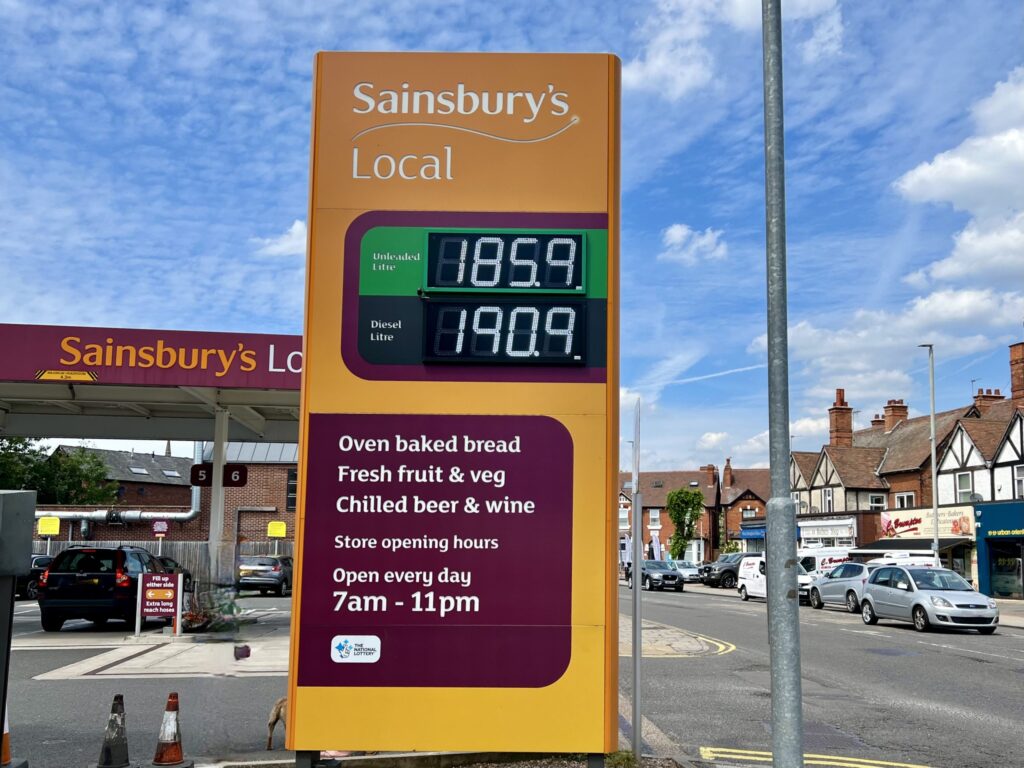
You’re on your way home, you spot a station selling diesel for 3p a litre less than the one you filled up at yesterday, and you can’t help wondering what’s going on. Both stations sell the same fuel. They’re a couple of miles apart. So why are petrol prices different from one forecourt to the next?
It’s one of the most common questions drivers ask, and the honest answer is that there isn’t just one reason. A mix of tax, wholesale costs, local competition and plain old business decisions all shape the number you see on the pump. Once you understand what’s behind it, you can make smarter choices about where to fill up, and that’s where a good UK fuel price comparison comes in handy.
What Makes Up the Price You Pay at the Pump?
Before looking at why stations differ, it helps to know what’s in the price in the first place. A litre of petrol or diesel is made up of several parts:
- The cost of crude oil and refining. This is the raw cost of producing the fuel, and it moves with global oil markets.
- Fuel duty. This is a fixed tax charged per litre, and it’s the same for every retailer.
- VAT. Charged at 20% on top of the whole price, including the duty.
- The retailer’s costs and margin. This covers transport, staff, running the site, and whatever profit the retailer wants to make.
Here’s the key point. Tax makes up a very large share of the price, and it’s identical everywhere in the UK. That means the differences you see between stations come from the remaining slice: wholesale buying, running costs and margin. Small changes in that slice can still add up to several pence per litre.
Reason 1: Local Competition
This is probably the biggest factor, and the one you can see with your own eyes. A station surrounded by rivals has to keep its prices sharp or customers will drive straight past. Where several forecourts sit close together, prices tend to be lower and they tend to move in step with each other.
On the other hand, a station that’s the only one for miles has far less pressure. Drivers in rural areas often pay more simply because there’s nowhere else convenient to go. Motorway services are the extreme example, since drivers are a captive audience and the prices usually reflect that.
Reason 2: Different Wholesale Costs and Supply Deals
Not every station buys its fuel on the same terms. Large supermarket chains and oil company sites often have significant buying power and well-established supply arrangements. Independent forecourts may pay a different price, depending on who supplies them, how much they buy and how far the delivery has to travel.
Fuel is also bought in advance, which means a station might still be selling stock bought when wholesale prices were different. That’s one reason pump prices don’t always change at the same time, or by the same amount, when oil prices move.
Reason 3: Running Costs and Location
Every forecourt has bills to pay, and they aren’t the same everywhere. Rent or business rates in a busy town centre can be far higher than in a small village. Staffing, security, insurance and energy costs all vary, and retailers have to cover them somehow.
A site that also runs a large shop, a car wash or a coffee counter might be happy to take a smaller margin on fuel to bring people through the door. A basic pump-only station may do the opposite. Either way, what’s going on behind the scenes affects what you pay.
Reason 4: Pricing Strategy
Retailers make deliberate choices about how to price their fuel. Some aim to be the cheapest in the area and make their money on volume. Others set higher prices and rely on convenience, brand loyalty or loyalty card schemes.
Many stations also keep a close eye on their neighbours and adjust their prices to match, or to undercut by a penny or two. That’s why you’ll sometimes see prices at nearby stations change on the same day.
Reason 5: Fuel Type and Grade
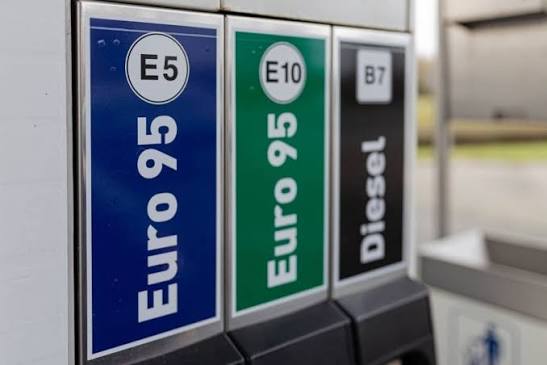
It’s easy to forget that “the price” isn’t one figure. A station may sell standard E10 unleaded, E5 super unleaded, B7 diesel and premium diesel, each at a different price. A site might be competitive on diesel and expensive on super unleaded, or the other way round.
That’s why you should always compare the same grade. If you drive a diesel, looking at the cheapest diesel near me means comparing diesel to diesel, not glancing at the biggest number on the sign and assuming the rest follows.
Reason 6: Brand and Type of Retailer
The type of station matters too. Supermarket forecourts have historically been among the cheapest, because fuel brings shoppers to the store. Branded stations run by major oil companies often charge a bit more, partly because of the brand and partly because of the extra services they offer. Independents sit anywhere in between.
That’s a generalisation, of course. Plenty of independents beat the big names on price, and plenty of supermarkets aren’t the cheapest in their area. The only way to know is to check, rather than assume.
Why Prices Don’t Move Together
You might have noticed that when oil prices rise, pump prices seem to jump quickly, but when oil prices fall, pump prices come down more slowly. Drivers often call this “rocket and feather”, and it’s a long-running complaint.
Part of the explanation is stock. Retailers are selling fuel they bought earlier, so changes take a while to reach the forecourt. Another part is that retailers react at different speeds. Some adjust within a day, while others take longer. The result is that, at any given moment, you can find a wide spread of prices in the same area.
The government has also taken an interest in this. Under the Fuel Finder scheme, covered fuel retailers have to share their pump prices, which gives drivers a clearer picture of what’s being charged and where. That’s the data our comparison tool uses.
How Big Is the Difference, Really?
It can be bigger than you’d think. As a simple example, imagine two stations in the same town, one selling diesel at 5p a litre less than the other. On a 55-litre fill, that’s £2.75 saved. If you fill up weekly, that comes to around £143 over a year.
The figures are illustrative, but the principle holds. Drivers who cover a lot of miles, such as commuters, taxi drivers, delivery drivers and van owners, can save much more by checking prices regularly.
How to Use a UK Fuel Price Comparison to Your Advantage
Understanding why prices differ is useful, but the real benefit comes from acting on it. Here’s a simple routine:
- Search your area. Enter your postcode, town or county into a UK fuel price comparison tool to see nearby stations.
- Pick your fuel type. Compare E10, E5, B7 or premium diesel, depending on what your vehicle needs.
- Sort by price and distance. The lowest price isn’t always the best deal if it means a long detour.
- Check when the price was reported. A recent update is a better guide to what you’ll actually pay.
- Repeat now and then. Prices change, and the cheapest station this week might not be next week.
If you’re after the cheapest diesel near me, this approach takes a minute or two and can show you options you’d never have spotted by simply driving past.
Frequently Asked Questions
Why are petrol prices different between stations in the same town?
Differences come from competition, supply deals, running costs and each retailer’s pricing strategy. Tax is the same everywhere, so the variation comes from the remaining parts of the price.
Are supermarket petrol stations always cheaper?
Often, but not always. Supermarkets have a reputation for competitive fuel prices, but some independents beat them locally. Comparing prices in your own area is the only reliable way to find out.
Why are motorway services more expensive?
They have less competition, higher running costs and a captive audience of drivers who need fuel. If you can, fill up in a nearby town before joining the motorway.
How can I find the cheapest diesel near me?
Search by postcode, town or county in a comparison tool, choose diesel as your fuel type, and sort by price. Then weigh the price against how far you’d need to drive.
Do prices change during the day?
They can. Retailers may change prices at any time, and some do so frequently. That’s why checking shortly before you fill up gives the most useful result.
So, why are petrol prices different from station to station? It comes down to competition, the cost of buying and running a site, and the choices each retailer makes about pricing. Tax stays the same for everyone, but almost everything else varies.
The good news is that you don’t have to guess. A quick UK fuel price comparison before you set off lets you see what’s on offer and choose accordingly. Visit petrol-price.co.uk, enter your postcode and find the cheapest petrol or diesel near you today.